






Where is the high-capacity network services market headed in the AI era? This critical question is at the center of Ciena’s recently published Wave Services Report. Francisco Sant’Anna explores the key findings.
AI is transforming the demand for high-capacity connectivity and creating new revenue opportunities for service providers. The latest edition of Ciena’s Wave Services Report examines how these market dynamics are unfolding— connecting the dots across market drivers, evolving service requirements, and the revenue growth opportunities ahead.
With deep expertise and a history of collaboratively co-developing wavelength services with leading service providers worldwide, Ciena has a unique perspective on this market—from understanding the high-speed connectivity needs of enterprises, hyperscalers, and other infrastructure players to supporting strategies for building the high-performance networks that address those needs.
Built on advanced coherent optics, programmable photonics, and AI-driven network automation, wave services provide the high-capacity, low-latency connectivity needed to move massive volumes of data across data centers, cloud regions, terrestrial networks, and submarine routes. As AI scales globally across training, inference, enterprise, and sovereign deployments, wave services are becoming more scalable, intelligent, and essential to the global network landscape.
The report examines these trends in depth and offers rich insights to help service providers advance their wave services portfolios.
Sustained revenue growth ahead
As we navigate the latest research, informed by leading industry analysts, one of the clearest signals is that wave services are entering a new phase of sustained growth.
The highlight: global wave services revenue is projected to grow at an 18% CAGR and exceed $50 billion by 2030. As a reference, top global service providers have been growing their overall revenues at an average of less than 1% CAGR over the last 12 years.
In an industry used to seeing traffic growth that does not always translate into revenue, this represents a clear monetization opportunity for network operators.
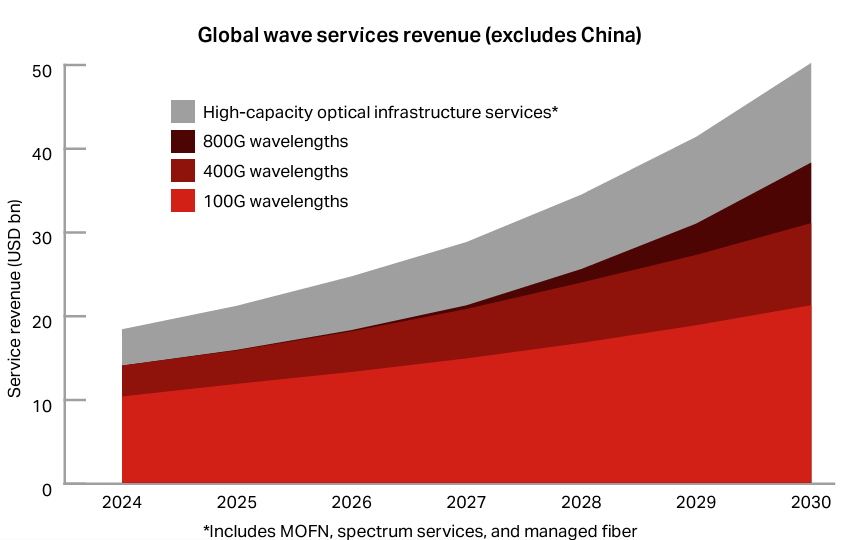
Figure 1: Source: Omdia, “Ciena Global Wavelength Services Survey,” Sept. 2025
Top demand drivers
Looking across the market, six AI-driven trends stand out as the primary forces reshaping demand for wave services.
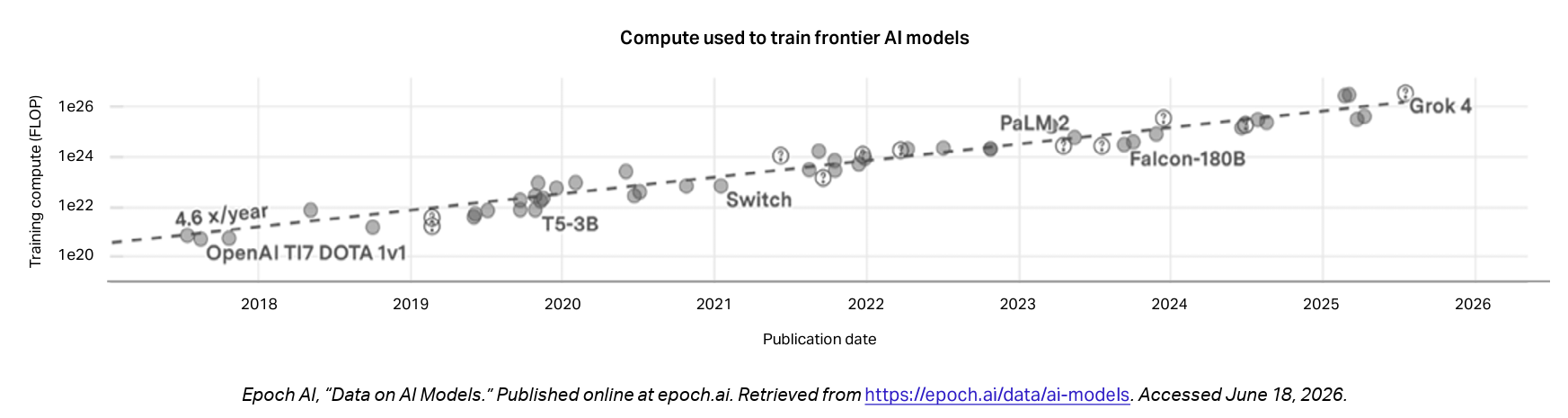
- The AI infrastructure buildout continues to accelerate, multiplying both the number of data centers and the size and capacity of GPU clusters—all requiring ever more intense data flows to deliver value.
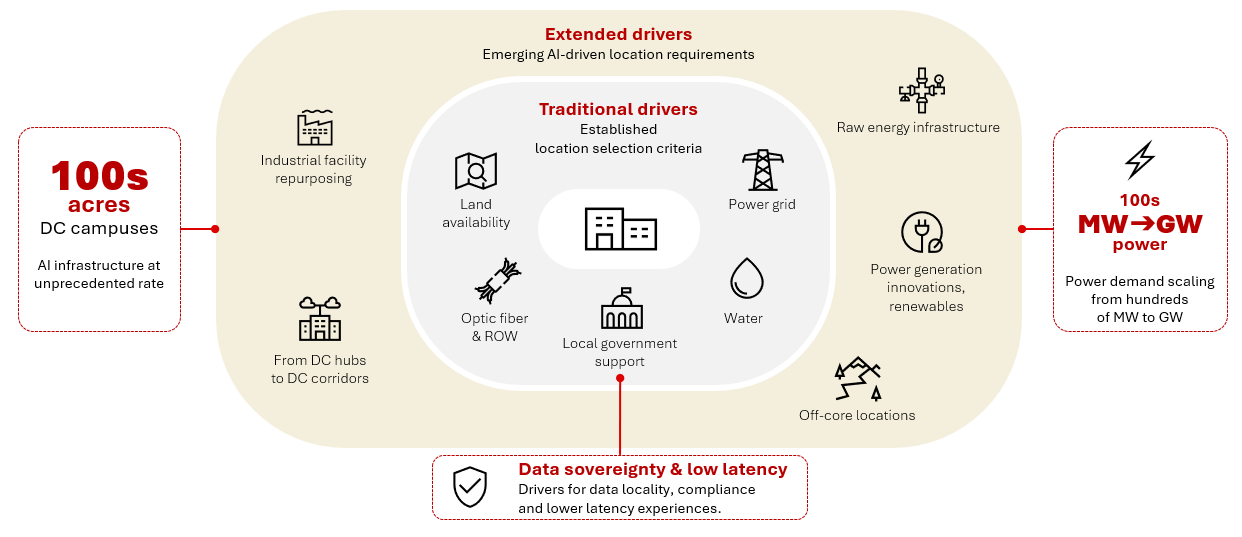
- Evolving data center distribution is changing where AI infrastructure is built and where new demand will emerge.
- The rise of neoscalers is diversifying the AI ecosystem and introducing requirements for fast-scaling network services. These are AI-native players providing specialized AI compute (GPUaaS) or building advanced models and applications. With a lean operating model, distributed infrastructure, and a partnership-driven business model, they introduce new opportunities to service providers, explored in the report.
- The acceleration of distributed training is driving the need for petabit-scale, low-latency DCI to connect geographically distributed AI factories.
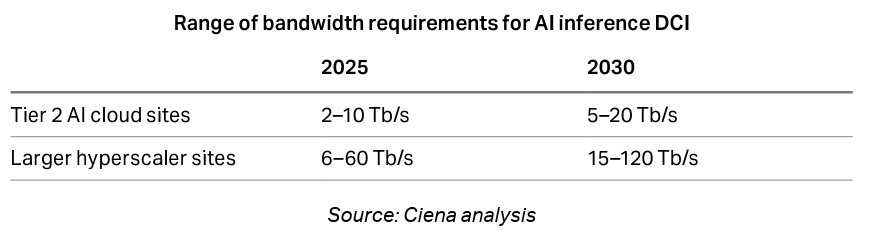
- Inference is crossing an inflection point, catalyzed by rapid adoption, integration into digital services, AI agents, multimodality, reasoning, and geographic distribution. It is taking the lead as the main driver for AI infrastructure expansion, as global spending on inference is set to exceed that of training for the first time in 2026. Given its sheer volume and quickly evolving algorithms and supporting architectures, understanding AI inference network requirements becomes critical to comprehend AI-driven wave services opportunities.
- Enterprises are massively investing in AI transformation. To customize and run agents tailored to the unique needs of their business, they need to move massive amounts of data across clouds, data centers, and AI platforms, creating new connectivity challenges and requirements.
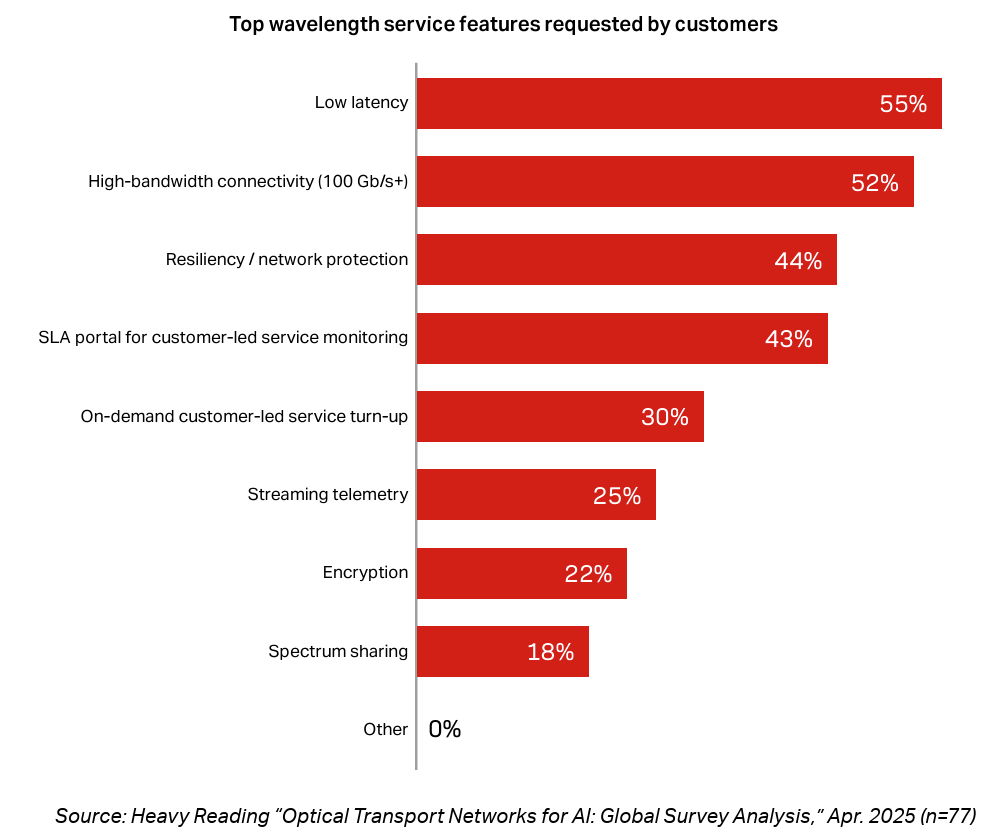
AI is not only driving demand growth; it is also creating new service requirements and igniting advances in network architecture—trends richly explored in the report. Meeting this growing demand and addressing evolving needs involves scaling networks and developing new competencies that can set service providers apart from their competition.
Fiber-pair capacity is being maximized to cope with surging DCI bandwidth demand, especially through spectrum expansion and efficiency improvements. Ultra-high-bandwidth DCI is increasing the need to light large numbers of fiber pairs on strategic routes, enabled by dense multi-rail architectures. MOFN service models are evolving, while on-demand capabilities are gaining importance to support the shifting nature of enterprise dataset movement.
Across all of this, networks are becoming more mission critical, pushing operators toward higher-availability designs and more advanced operational capabilities.
Opportunities ahead
Looking ahead, the biggest opportunity isn't simply keeping pace with AI-driven traffic growth—it's helping customers solve the new connectivity challenges AI creates. For service providers to fully capitalize on this will require a deep understanding of the market landscape and demand drivers, preparation to deliver on emerging network requirements, and thoughtful go-to-market strategies.
The latest edition of Ciena’s Wave Services Report explores these trends in greater depth, and provides insights to help service providers navigate this fast-changing market and position themselves for AI-driven growth.