






March 30, 2026
By Sterling Perrin
Senior Principal Analyst, Optical Networks and Transport, Omdia
Omdia's latest global transport network automation study emphasizes the importance of AI, automation, and network digital twins in transport network operations.
Communications service providers (CSPs) continue to make steady progress in automating their transport networks. As they automate transport, these operators increasingly see the potential for AI in a complementary role. Automation and AI are highly symbiotic: AI helps improve the output of automation while automation helps AI do its job.
Working with partners Ciena and Cisco, Omdia conducted a global survey of CSPs as part of its global transport network automation study that tracks the evolution of automation and AI in transport networks. The survey was conducted in November 2025 and attracted 80 qualified respondents.
The first of two, this blog focuses on the importance of AI in transport network operations and the role of network digital twins as an enabler for both transport automation and AI.
AI enthusiasm
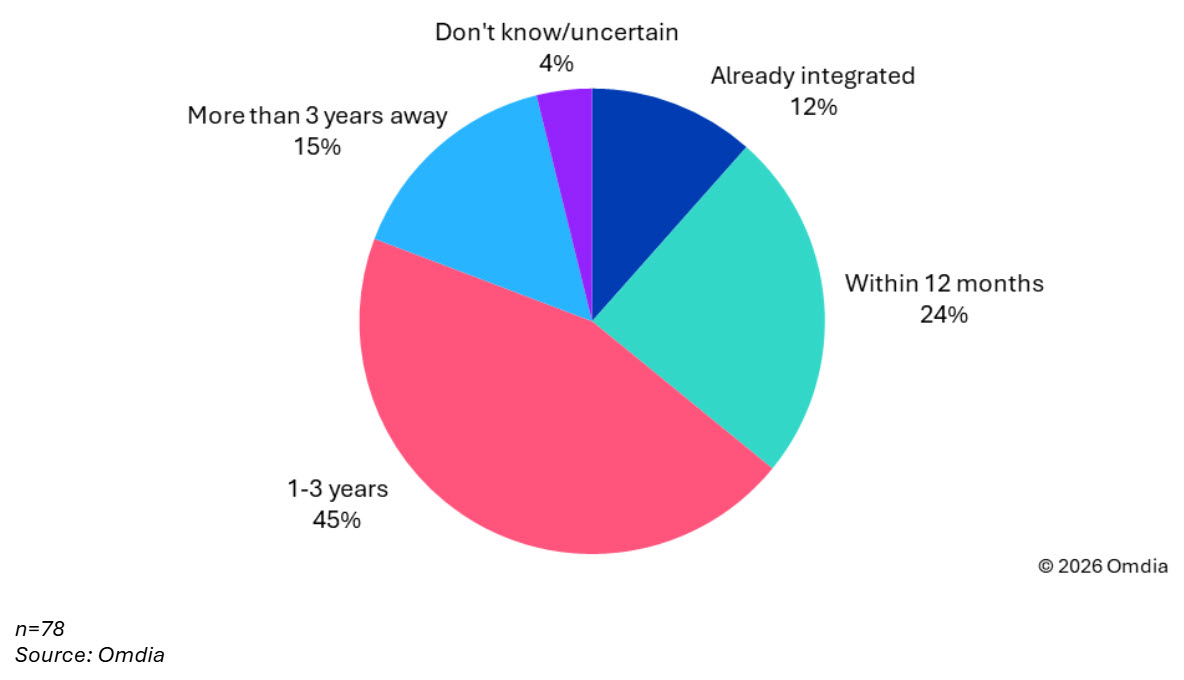
True automation is relatively new for transport networks, and AI is newer still. But Omdia survey data shows that CSPs are embracing the technology. According to the survey, over one-third of CSPs report that AI is already a routine part of operations and planning or will be within a year. Of the respondents, 12% indicated that they have already integrated AI in daily workflow for operations/planning, and 24% expect to do so within 12 months. An additional 45% of operators surveyed expect AI to become routine in operations/planning within the next one to three years.
When do you expect AI to become a routine part of your daily workflow in operations and planning?
The benefits of AI in transport networks
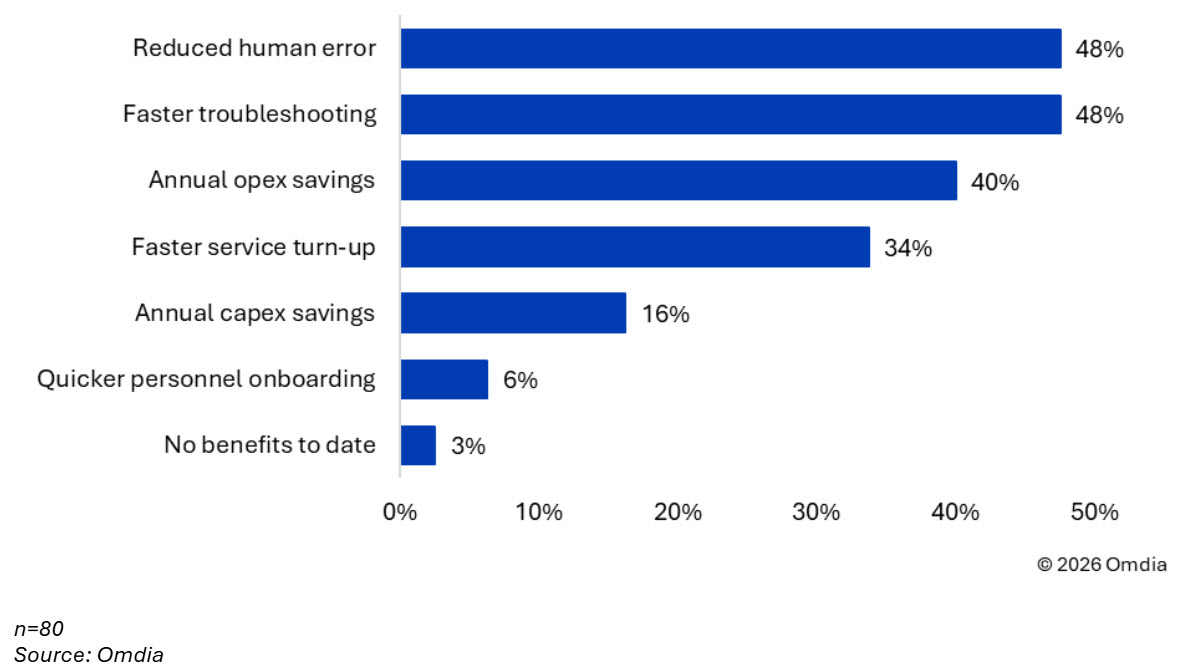
In adopting AI for their transport network operations, CSPs expect two primary benefits: reduced human error and faster troubleshooting (each selected by 48% of respondents). Opex savings are also an important AI benefit for many (selected by 40%), which is understandable given that they are an outcome of the top two benefits. However, few operators expect AI to help reduce capex or speed up personnel onboarding (picked by just 16% and 6% of respondents, respectively).
Capex scored low on this survey question, but that does not necessarily mean the long-term role of AI in capex will be minimal. It may be that network operators have not yet found a reliable way to quantify the impacts of AI, or that the other areas are a higher near-term priority. This picture could change as AI adoption in transport matures.
To date, what are the most significant benefits of AI for your transport network operations? (Select up to three)
A role for network digital twins
In addition to AI, another emerging concept in the transport network is the digital twin. A network digital twin is a virtual replica of a physical network, including its devices, connections, and operations.
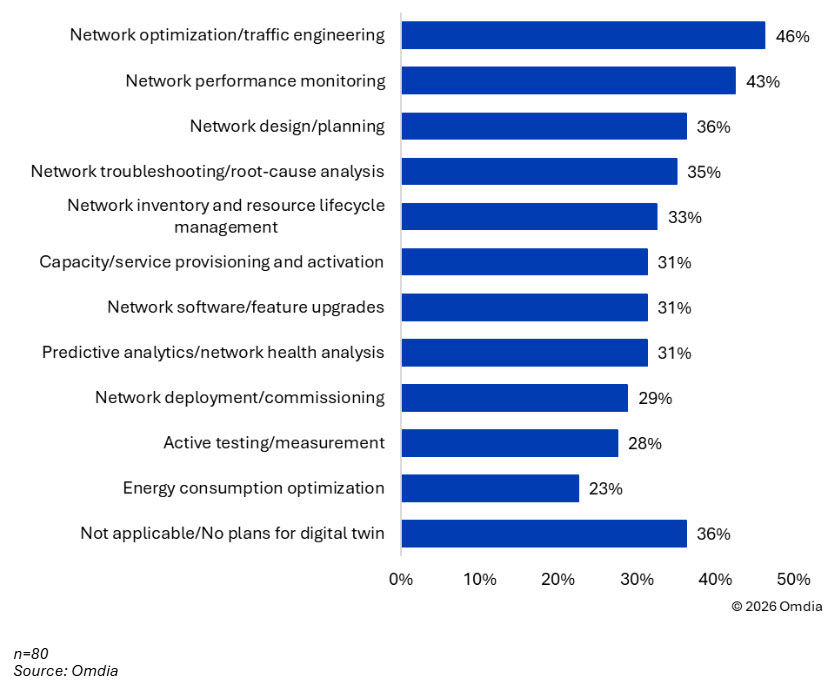
Of the 11 transport use cases identified in this report, network optimization and traffic engineering (selected by 46% of respondents) and network performance monitoring (selected by 43%) ranked highest as suitable for digital twins. An additional six use cases were each selected as important for a digital twin by at least 31% of CSPs.
In a separate question, network optimization/traffic engineering is also shown to be an important use case for another emerging concept for the transport network, agentic AI. While network operators see strong promise in AI decision-making and action, they are also concerned about the reliability of and accuracy of agentic AI output. Here, network digital twins can play an important complementary role in validating AI recommendations before they are implemented in a live network — thus mitigating risk.
Over the next year, for which of the following transport use cases will you use a network digital twin in your operations? (Select all that apply)
Looking for more information?
To gain a deeper understanding of how the technology is being applied to network operations, access the webinar recording and the white paper, which discuss the full survey results.
- Automation and AI Adoption for the Transport Network: 2025 Omdia Survey Results [webinar recording]
- Automation and AI for Transport Networks [whitepaper]
This blog originally appeared on LightReading.com.