






March 3, 2026
By Erik McLaughlin
Senior Director, Product Line Management
AIOps – the application of AI technology to network operations – is a well-used term nowadays; however, generic AIOps solutions fall short in real-world IP/Optical environments. In this blog, Erik McLaughlin outlines why specialized multi-layer domain knowledge and control are crucial ingredients for a meaningful AIOps implementation.
The term AIOps has become a catchall in today’s networking landscape. Nearly every platform claims to deliver smarter operations, faster troubleshooting, and improved efficiency. But as the noise grows louder, it’s increasingly clear that not all AIOps solutions deliver the same value.
For leaders in network operations, engineering, and planning, the real challenge isn’t whether a solution uses AI—it’s whether that AI truly understands the network it’s operating on. The difference between generic AIOps and domain-aware AIOps is the difference between incremental optimization and meaningful operational transformation.
The limitations of generic AIOps
Many AIOps platforms take a broad, horizontal approach—applying generic machine learning (ML) techniques to large volumes of data without deep understanding of the underlying network domains. While this can help reduce noise from excessive alerts, or surface anomalies, it often falls short when networks become complex, multi-layered, and highly vendor-specific.
Service provider networks demand more. Without optical, IP, and service layer context, and without the ability to correlate behavior across those layers, AI can only provide partial insight. The result is often simply detection without diagnosis, and automation without confidence.
Why domain context and data quality matter
Effective AIOps starts with high fidelity telemetry, deep domain expertise, and a unified multi-layer data model. Without these foundations, even the most advanced algorithms struggle to deliver insights that are accurate, relevant, and actionable.
Navigator Network Control Suite (Navigator NCS), Ciena’s multi-layer network controller, was designed with these principles at its core. Rather than treating AIOps as a bolt-on analytics layer, intelligence is natively embedded into Navigator NCS topology, performance, and service views. This approach combines domain-aware analytics with a rich visual context, enabling faster decisions and more confident actions.
A common multi-layer data model enables Navigator NCS to:
- Correlate across layers: Optical, optical transport network (OTN), Ethernet, IP, and service layers interact in complex ways. Navigator NCS correlates telemetry across these technologies to expose root causes and cascading impacts - something that generic AIOps platforms often miss.
- Deliver holistic network understanding: By unifying multilayer insights, Navigator NCS reveals hidden interdependencies and supports decisions that align short-term operations with long-term strategy.
Embedded intelligence in everyday workflows
Insight only creates value if it’s usable. Navigator NCS takes a user interface (UI) first approach to AIOps, delivering intelligence directly into the workflows network engineers and planners use every day. Navigator NCS is built UI-first—meaning intelligence is designed alongside network topology and service views, rather than surfaced later through disconnected dashboards. This makes it easier to visualize complex behaviors, explore cross-layer interactions, and act without requiring deep expertise in data science or AI. It makes it quicker for new operations users to advance on their learning curve.
Clear recommendations, intuitive visualizations, and interactive exploration tools help teams understand not just what is happening in the network—but why, and what to do next. And this embedded intelligence is not just provided visually, but is also available via Navigator NCS northbound application programming interfaces (APIs). This enables seamless integration and automation up and down the operational stack.
Given that Navigator NCS encapsulates the detailed knowledge and control needed to operate self-sufficiently within a certain network domain, we foresee the potential of having it function as an AI agent, interacting northbound with an end-to-end operations support system (OSS) agentic AI framework.
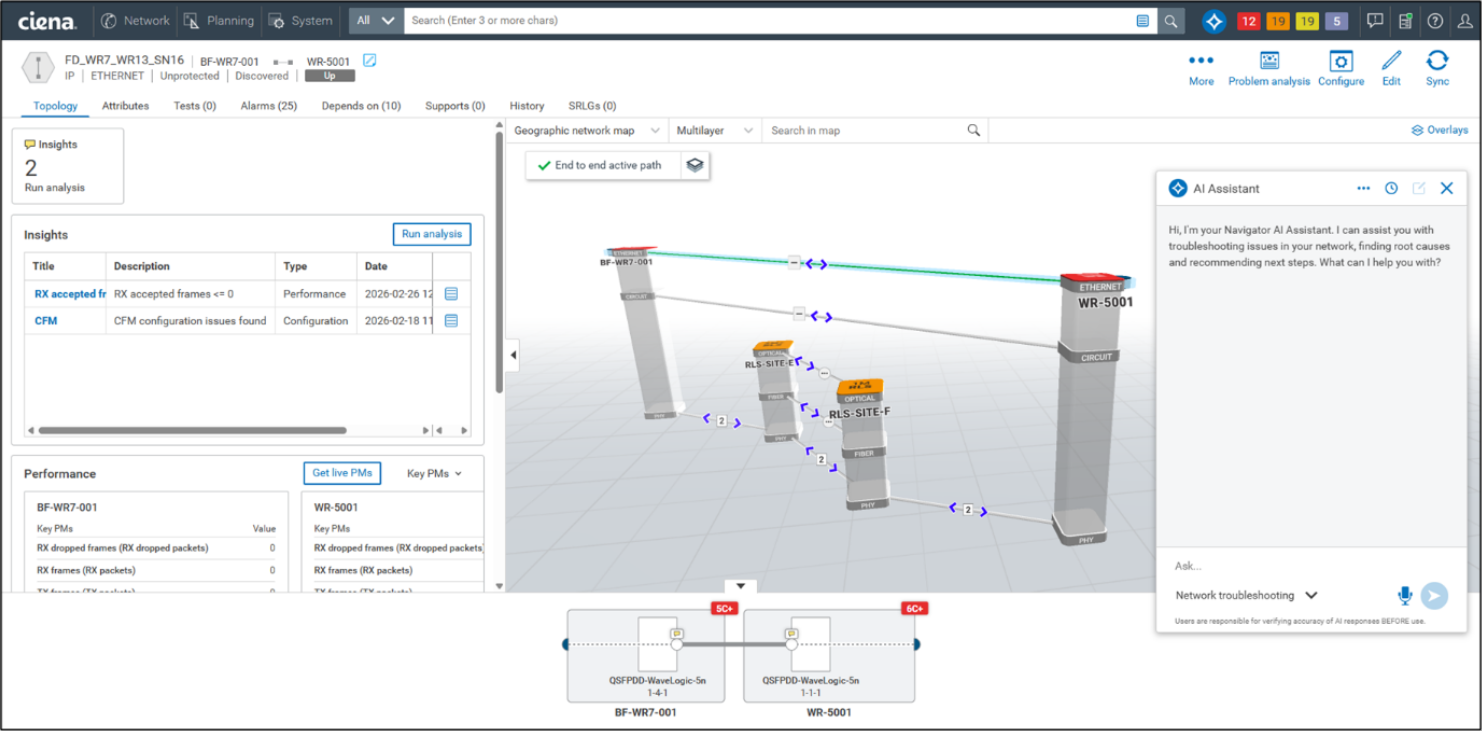
Figure 1: Intuitive visualization of correlated multi-layer insights with Navigator NCS
Moving beyond alert reduction
Alert reduction is often positioned as the primary value of AIOps. While important, it’s only a starting point. True operational intelligence goes further—helping teams anticipate issues, accelerate root cause analysis, and continuously optimize network performance.
Our Navigator NCS domain-aware AIOps solution enables teams to:
- Proactively identify patterns and anomalies before they impact services
- Accelerate root cause analysis through cross-layer correlation
- Reduce mean time to repair (MTTR) with real-time, actionable insight
- Improve planning accuracy using predictive analytics
- Drive operational efficiency through intelligent automation
- Optimize network performance to uphold high quality of service
- Extract more capacity from deployed network assets
- Predict network behavior to proactively build out capacity where and when needed
These are practical, day-to-day capabilities designed for the realities of service provider networks—not theoretical AI promises.
What generic AIOps misses—and Navigator delivers
Consider an optical signal degradation caused by environmental conditions. A generic AIOps platform may flag an anomaly, but without optical domain awareness or service correlation, it only provides limited guidance on impact or remediation. Navigator NCS goes further. By combining signal level visibility, domain-specific algorithms, and its common multi-layer data model, it not only identifies the issue but recommends corrective actions—connecting physical degradation to higher layer service impact.
Navigator NCS digital twin capabilities extend this further by simulating network behavior under different conditions. Teams can evaluate potential fixes, predict outcomes, and choose the best course of action before making changes in the live network. The ability to test decisions using the same models and assumptions trusted by experienced Ciena engineers with decades of real-world know-how, before changes are made in the live network.
The bottom line
Not all AIOps solutions are created equal. For service provider networks, the difference lies in depth—of data, of domain knowledge, and of actionable insight. Ciena’s AIOps approach with Navigator NCS is purpose-built for optical and IP networks, grounding intelligence in a common multi-layer data model, network digital twin innovation, and a UI-first design. The result is operational intelligence that goes beyond automation to deliver real confidence and control.
As you evaluate an AIOps solution, ask the hard questions:
- Does it truly understand my network?
- Does it deliver actionable intelligence—not just alerts?
- Does it position my team for the future of autonomous operations?
At Ciena, we believe the right AIOps solution isn’t just an operational enhancement—it’s a strategic business advantage.