






Does it feel like you’re trying to boil the ocean with AIOps? You may have piloted AI within your organization and seen some efficiency gains. But how can you operationalize the usage of AI to rethink and streamline your processes? In this blog, Ciena’s Marie Fiala describes a practical path forward to demonstrate compelling operational improvements, gain organizational acceptance, and generate momentum to explore more business-impacting use cases.
AIOps does not have to begin with a sweeping transformation. For many network operators, the smartest way to move forward is to start with one operational use case that addresses a clear pain point, delivers measurable value, and earns confidence across the organization. That first success matters. It can help turn AI from an interesting pilot into a practical part of day-to-day network operations.
Many operators have already experimented with AI and seen promising efficiency gains. The next challenge is operationalizing it: using AI—and increasingly agentic AI—to improve the speed, consistency, and quality of established processes. The key is to choose a use case where the impact will be obvious. That may mean helping engineers find answers faster, shortening troubleshooting cycles, automating repetitive workflows, or improving capacity planning. Once operators can see the benefit in one area, it becomes much easier to expand into others.
AIOps as a productivity accelerator
GenAI has already changed how we search for information in our daily lives – making it simpler and quicker. The same principle applies in network operations, where optical and IP domain experts are relied upon to be proficient in deeply technical concepts and vendor-specific implementations. Improving employee productivity was cited by telecom providers as the top goal of implementing AI initiatives in the IDC Worldwide Telco DX IT Applications and AI Survey this year.1
Workforce upskilling is all the more important as experienced operations personnel retire and newer team members need to build domain knowledge quickly. An AI assistant can support both experienced engineers and less-tenured staff by reducing the time spent searching for information and navigating management systems. Instead of knowing which menu, screen, report, or document contains the answer, an operator can ask a question in natural language format and quickly obtain an answer.
Where to start? Give it a try
At Ciena, we’ve been engaging with numerous service providers over the past year to understand their operational priorities and to demonstrate how Navigator Network Control Suite (Navigator NCS) AIOps capabilities can help address them. The most common entry point is our intuitive user interface – Navigator AI Assistant. From here, you can query to search documentation across multiple datasets, generate tailored reports, and help with complex troubleshooting, maintenance, or planning tasks. In Navigator NCS demonstrations, it doesn’t take more than a few minutes before operators respond enthusiastically to what they see, noting that they will save a lot of time when investigating and resolving network issues.
Several Ciena customers are in active trials and report that Navigator NCS provides huge value to their operations teams with relevant and accurate responses to a wide range of questions they deal with every day, such as:
- How to load new network element software to perform an upgrade?
- Help me troubleshoot this service and identify root cause.
- How can I provision a photonic service from A to Z?
- How should I set optical thresholds?
- How can I perform power measurements after fiber splicing?
- Why is this network element exhibiting slower performance?
- How can I identify configuration errors preventing an IS-IS adjacency?
- Why is this VPN down?
Move from finding answers to solving problems
Once you get comfortable with using the AI Assistant, you can fully tap into the multi-layer domain expertise that anchors the Navigator NCS agentic AI engine to address operational pain points. Although specific use cases vary with each service provider, they generally fall into three categories in optical and IP networks: network troubleshooting, workflow automation, and network capacity planning and optimization. This is where agentic AI becomes especially relevant. Rather than simply returning information, Navigator NCS AI agents can reason across multiple data sources, coordinate tasks, and recommend actions within an operational workflow. As trust with the system develops, users can move to more autonomous operations.
Navigator NCS can also expose capabilities through its northbound Agent to Agent (A2A) interface, allowing operators to easily integrate it into their chosen overarching agentic AI framework. For example, an operator’s agentic engine at the operational support system (OSS) layer can draw on Navigator’s optical and converged IP/optical domain expertise to execute end-to-end business-oriented workflows.
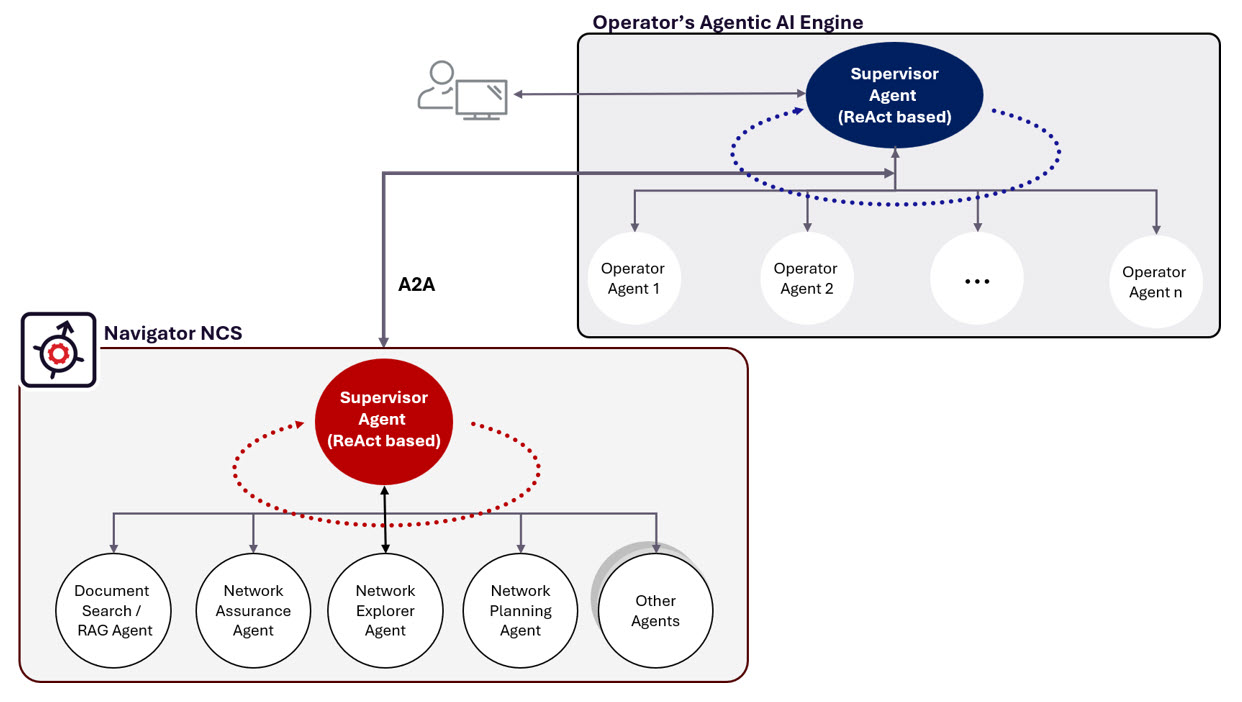
Figure 1: Navigator NCS uses A2A to expose its expert capabilities for business operations
Troubleshoot network issues faster
Network assurance is one of the clearest places to demonstrate AIOps value. Service-level agreement adherence depends on an operator’s ability to detect, understand, and resolve issues quickly. Yet the underlying root cause of a service issue may span optical and IP network layers and device-specific data, making root cause analysis difficult and time-consuming.
Navigator NCS’ AI-powered assurance workflow can correlate behavior across those layers, identify likely causes, and recommend or initiate remediation steps. Its network digital twin can be used to evaluate alternative service paths based on parameters such as bandwidth and latency. This gives operators a way to test a potential remediation approach before applying it to the live network. In Ciena’s rigorous lab testing, Navigator NCS AIOps reduced the time required to analyze a range of typical optical and Ethernet network issues by >60%, on average, in comparison to today’s troubleshooting methods.
A similar approach can help address natural disasters, optical impairments, and changes in the physical environment. By combining advanced fiber telemetry with AI-based analysis, operators can identify signs of optical degradation earlier, correlate the impact across layers, and validate corrective actions.
The potential value is significant:
- Faster root cause analysis
- Fewer service disruptions
- Better SLA adherence
- Lower operational effort
- Improved customer experience
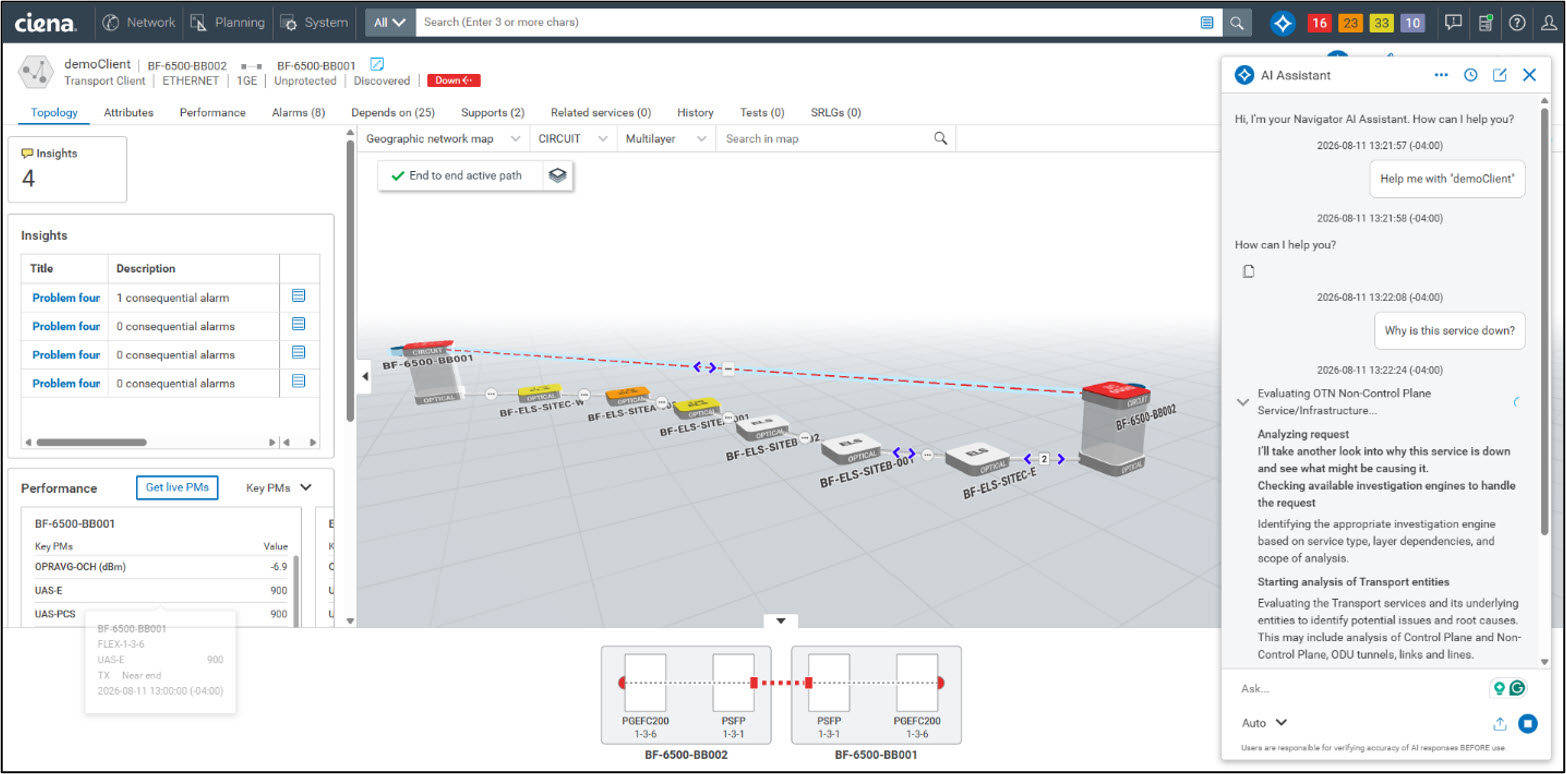
Figure 2: Navigator AI Assistant helps troubleshoot multi-layer network issues faster
Automate repetitive workflows
Network operations teams perform many of the same workflows repeatedly. They continuously monitor network performance and take measures if they spot any degradations or faults. They keep the network clean by auditing network devices against an approved configuration and resolving any mismatches. They adjust services and resources as conditions change. These activities are necessary, but they can consume valuable time.
With the Navigator NCS agentic AI engine, operators can create dynamic autonomous agents that execute specific workflows and trigger actions with human-in-the-loop oversight. This does not remove the operator from the process. Instead, it gives the operator a faster and more consistent way to manage routine work. For example, Navigator NCS can tap into advanced analytics to monitor optical performance, continuously adjust throughput as needed, and ensure ongoing high service performance.
Other opportunities may include:
- Identifying configuration inconsistencies
- Prioritizing alarms
- Correlating events across domains
- Recommending remediation steps
- Supporting repeatable maintenance procedures
- Escalating exceptions for human review
Improve capacity planning and optimization
Capacity planning is another strong AIOps opportunity because it combines large datasets, changing traffic patterns, and long-term business decisions. The planning process typically starts with extensive analysis of historical network trends. Operators need to anticipate capacity exhaustion, support new service launches, respond to shifting demand, and determine where additional resources should be placed. AI-assisted planning can help teams evaluate those decisions more efficiently.
This type of workflow can help operators:
- Forecast demand
- Evaluate multi-layer dependencies
- Optimize resource placement
- Reduce the risk of stranded capacity
- Avoid unnecessary capital investment
- Identify potential SLA risks before they emerge
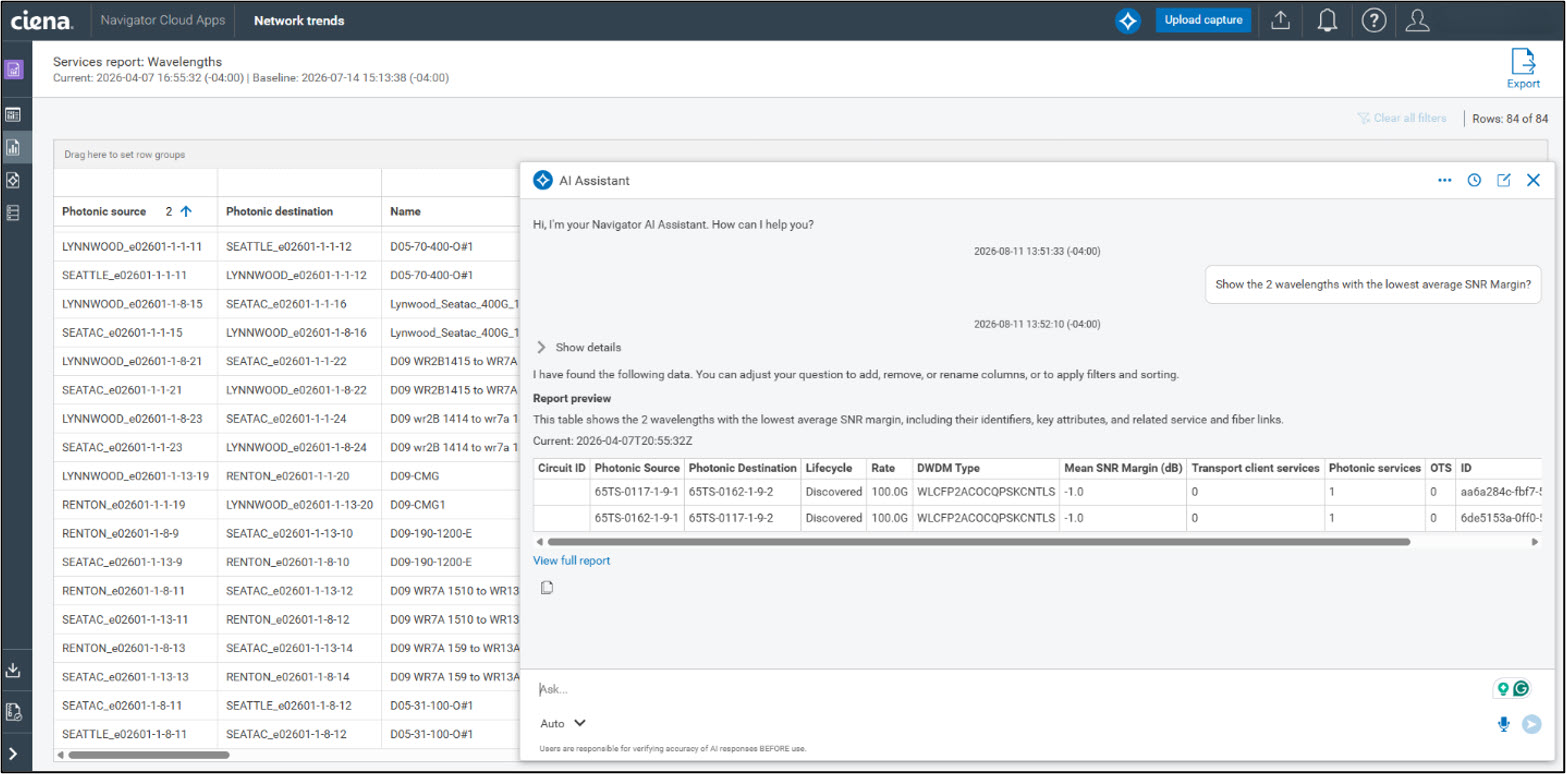
Figure 3: Navigator NCS facilitates capacity planning with comprehensive, tailored network trends
Build momentum one use case at a time
The most successful AIOps journeys may not begin with a large-scale transformation. They can begin with a single question answered faster, a recurring workflow automated, or a network issue resolved before it affects customers. Those early successes can create the confidence needed to move forward. Ciena’s AIOps approach with Navigator NCS is purpose-built for optical and IP networks, grounding intelligence in detailed network data correlated within a common multi-layer data model, delivering reliable recommendations rapidly.
For network operations teams, the benefits include:
- Greater efficiency through automation of routine tasks
- Faster and more informed decision-making
- Earlier identification of potential issues
- Quicker service restoration
- Faster onboarding and training
- More consistent operational processes
The important thing is to start with a meaningful problem. Choose a use case where the operational impact is easy to understand. Prove the value. Learn from the experience. Then expand. AIOps does not have to mean boiling the ocean. It can start with one practical step—and grow from there.
1Source: "IDC, IDC Survey: Telco Transformation, 2026: Global Telecom AI Plans and Strategy Highlights", US54659626, July 2026.