






Historically, optical network deployments have been manual, error-prone, and time-consuming, potentially leaving some capacity unmined. Automated Deployment Optimizer (ADO) is a new Navigator Network Control Suite (Navigator NCS) application that automates commissioning, calibration, and optimization to accelerate optical deployments for submarine and terrestrial networks. In this blog, Marie Fiala describes how ADO enables operators to keep pace with surging network demands while reducing opex.
AI is dominating the networking industry news, including ways in which it can be applied to speed up network operations. Yet there is a lot of operational efficiency to be gained by automating workflows that are already ingrained in tried-and-true methods of operations. One such example is the time-consuming, meticulous process that is required to deploy fiber pairs and optical channels, to bring up high-speed connectivity between and across continents – subsea or terrestrial. As hyperscalers race to scale connectivity for consumers of new AI and traditional cloud services, they need to deploy optical capacity faster than ever before.
As depicted below, there are six manual steps for optical network deployment: calibration, correlation, channel addition, characterization, capacity optimization, and confidence testing. With Automated Deployment Optimizer (ADO), a new Navigator Network Control Suite (Navigator NCS) application, these steps are automated, with human-in-the-loop oversight, improving accuracy and consistency and accelerating the process from days to hours. Our testing has demonstrated an astounding 80% reduction in deployment time per fiber pair.
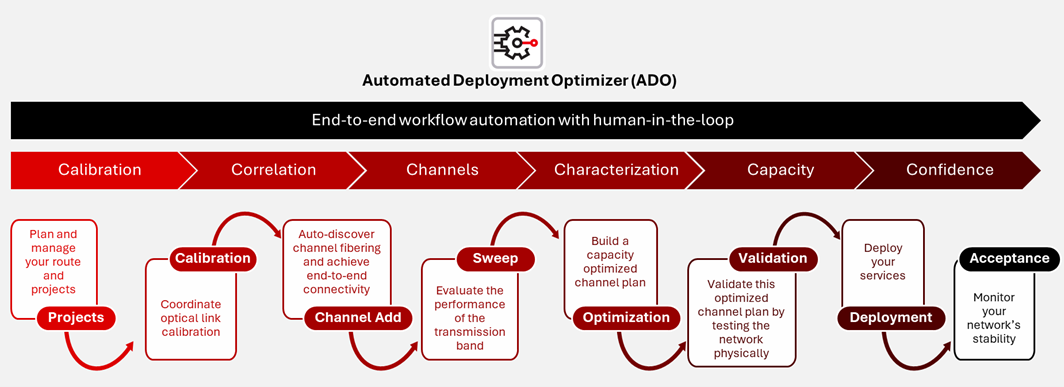 Figure 1. ADO automates optical network deployments, enabling operators to scale high-speed connectivity very quickly
Demonstrated benefits
Our ADO solution has been successfully trialed by several hyperscaler customers for deployment of fiber pairs and optical channels over subsea routes ranging from 3,000 km to over 10,000 km. The ADO results are impressive, with elapsed time from project creation to channel addition less than two hours in comparison to 5 days. In particular, the time to add a channel and characterize its performance with a sweep averaged less than 50 minutes. Moreover, with ADO’s bulk channel add functionality, adding 1 channel or 24 channels requires the same amount of time, so customers can deploy multiple fiber pairs in parallel across different cables and scale deployment much faster. Throughout our trials, users have noted that ADO velocity is a game-changer, and also the interface is very easy-to-use with useful context-based troubleshooting.
This level of automation is most critical for large-scale subsea networks but is also valuable in terrestrial networks where optical capacity is being deployed at a fast rate. ADO enables network operators to grow at scale quickly and monetize their infrastructure investment sooner, while saving opex. Furthermore, the automated, remote deployment eliminates the need to physically send personnel to the site for turn-up and test activities. This reduces carbon footprint and helps increase sustainability.
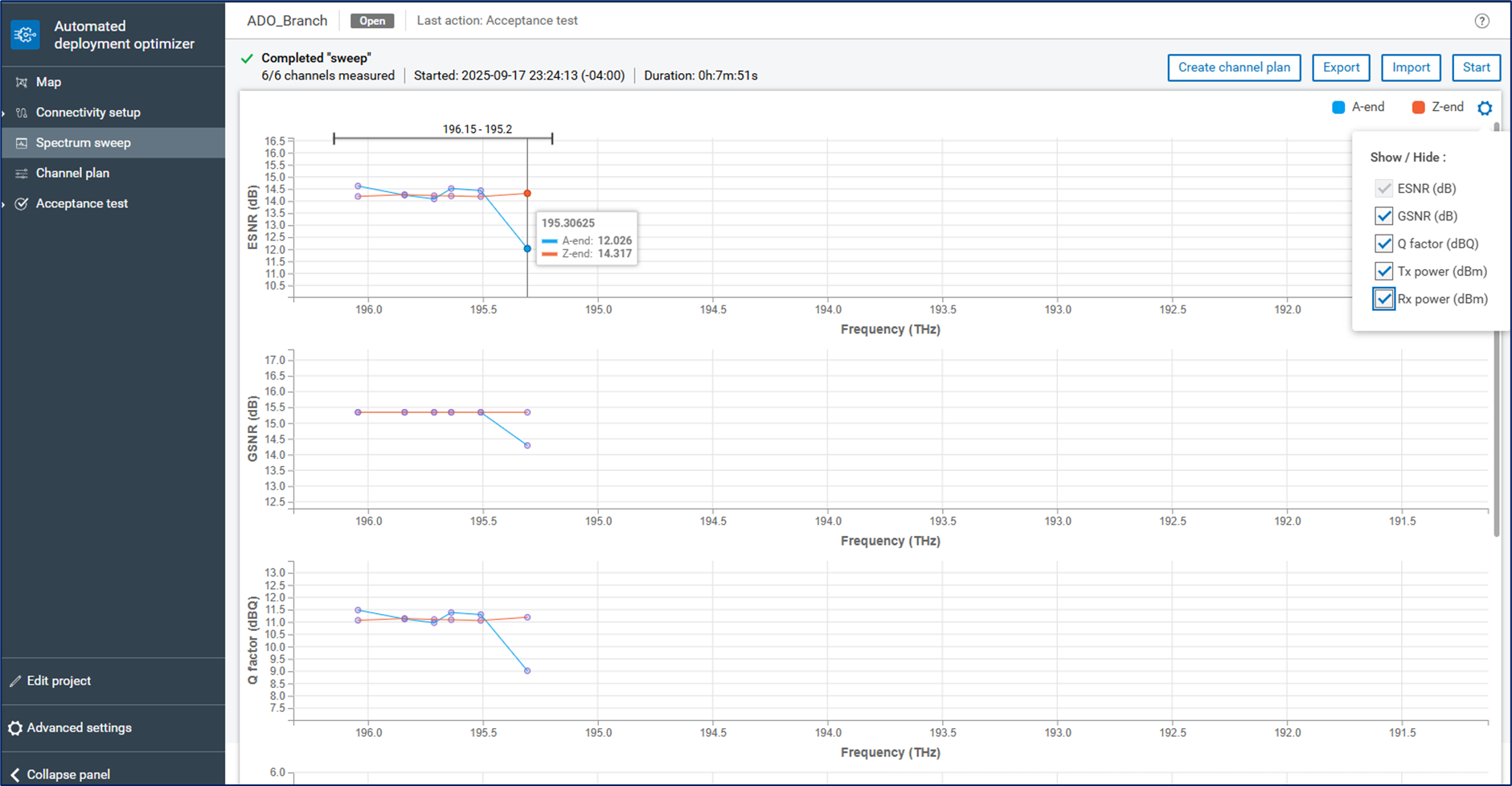 Figure 2. Example of the intuitive ADO user interface with performance measurements
Automation opportunities across lifecycle operations
Ciena's Navigator NCS, with the implementation of ADO, transforms what was once a lengthy, laborious deployment process into automated, efficient operations, enabling quicker buildouts and revenue realization. The ADO application is only one example of what can be achieved based on the comprehensive network visibility and control that is afforded by Navigator NCS. With Navigator’s AI-driven insights and open APIs, you can also enhance and automate troubleshooting, optimization, and planning workflows that are an integral part of lifecycle network operations. We can show you how.