






August 10, 2026
By Matthew Bolig
Senior Advisor, Product & Technology Marketing
Cloud service providers are clear about what they need from AI networking: scale, density, reliability, low power, and cost efficiency. Discover how the Ciena Vesta 200 6.4T optical engine was architected to deliver the right balance across all five areas.
Throughout the history of optical networking, end-user requirements have not always been obvious. Customers have consistently pushed for maximum performance while demanding uncompromising reliability, but determining the right balance has often taken years. Although requirements eventually emerge, there can be long periods of indeterminacy.
Recent history, however, has been different in one significant way. Over the course of the last three years – since AI buildouts began in earnest – cloud service providers have been crystal clear about their requirements for new networking technologies:
- Delivered at scale
- High density
- High reliability
- Low power
- Reasonable cost
The challenge for networking technology developers is to understand and deliver the proper balance of these attributes – and not optimize for one metric to the detriment of another. For example, one could use boutique architectures to optimize for density, but realize it may be at the expense of reliability.
Helping our customers navigate these tradeoffs was critical for us. Earlier this year, Ciena released a CPO optical engine that hits this optimal balance of technologies. As shown in Figure 1, the Vesta 200 6.4T optical engine is the first optical product released by Ciena resulting from the Nubis acquisition in 2025.
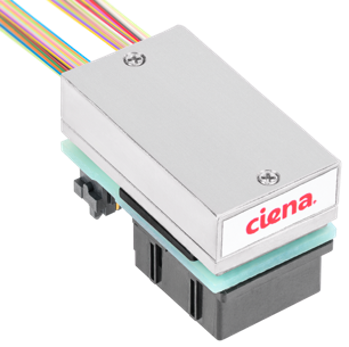 Figure 1. Vesta 200 6.4T CPX Optical Engine for CPO / NPO
Vesta is the result of carefully designed architecture and deliberate technology selections, tailored to meet the rigorous requirements of hyperscale customers. Let's take a closer look at how Vesta delivers across each of these key requirements.
Delivery at scale
High-volume manufacturing depends on several key factors. Among the most critical are how much manufacturing volume exists to produce the product. This is where Vesta's CPX architecture becomes important. The Vesta 200 6.4T CPX is designed – not surprisingly – to meet the standards set out by the Open CPX MSA. As shown in 2, the MSA currently has eleven industry-leading member companies that are devoted to creating a standardized, pluggable form factor that can be used flexibly for optical and copper connectivity in both co-packaged and near package applications, with either external or integrated lasers.
As a standardized solution, CPX leverages the combined manufacturing infrastructure of many of the world’s leading optics and connector companies, ensuring that the technology can be delivered at the massive scale required by cloud service providers. A thorough exploration of the importance of the MSA can be found in this article: How open ecosystems will advance CPO adoption.

Figure 2. Open CPX MSA Member Companies
High density
Data density is one of the critical factors limiting networking throughput today. There are two critical bottlenecks when considering this topic. The first is at the ASIC (XPU or switch). The second is escaping the box, either at the front panel or back panel.
When rearchitecting optics from the front panel to a co-packaged implementation, it is critical that the CPO has bandwidth density (bits/sec/mm) that either equals or exceeds that of the ASIC package. Package size estimates for current 102T datacenter switches, with a 512 x 200Gbps radix, are in the range of 90mm x 90mm. The CPX optical module form factor consumes about 16mm of beachfront and the socket. This means that four Vesta CPX modules can interconnect 25.6 Tbps on a single package edge and 102.4 Tbps for the complete switch ASIC package, as shown in 3.
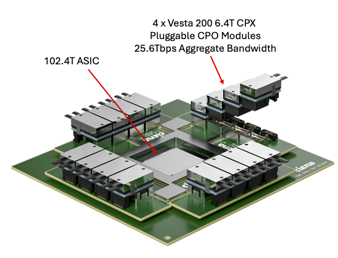
Figure 3. 102.4 Tbps Switch with Vesta 200 6.4T CPX Interconnect
While today’s discussions focus primarily on 102.4T systems, 204.8T platforms are already on the horizon. Vesta’s core optical engine is poised to meet the demands of this market, delivering ultra-high density connectivity of close to 1Tbps/mm.
Another important component of the density discussion has to do with escaping the chassis. Currently, 32 x 1.6Tbps OSFP modules consume a single rack unit (RU) and provide a total connectivity of 51.2 Tbps. This was largely sufficient in the age of air cooling, where multiple rack units would need to be consumed to deliver sufficient air flow. In the age of liquid cooling, where airflow is no longer a factor, escape bandwidth has become the primary limiter of system density. With Vesta enabled CPO, Very Small Form Factor (VSFF) optical connectors can now be mounted on the front panel with the ability to connect over 3000 fibers (> 300 Tbsp), effectively removing the bottleneck and paving the way for next-gen 200T+ implementations.
High reliability
Reliability is also a multifaceted discussion and may depend on underlying technologies, as in the example of wrist watches that generally utilize either mechanical or electronic mechanisms to turn hands on a dial. While the mechanical watch is subject to the vagaries of varying spring tension and metal fatigue, the electronic watch has none of these issues and will therefore usually be far more accurate. Reliability also reflects how long a technology operates before failure. Extending the watch metaphor, again, the mechanical implementation will generally experience failure due to the number of parts, especially the number of moving parts.
As with watches, the underlying technologies are also of critical importance when considering CPO optical engines. At the heart of the design are two primary components: the electronics integrated circuit (EIC) and the photonics integrated circuit (PIC). Vesta utilizes architectures and materials for each that deliver both high-performance and exceptional reliability. The Vesta architecture is shown in Figure 4.
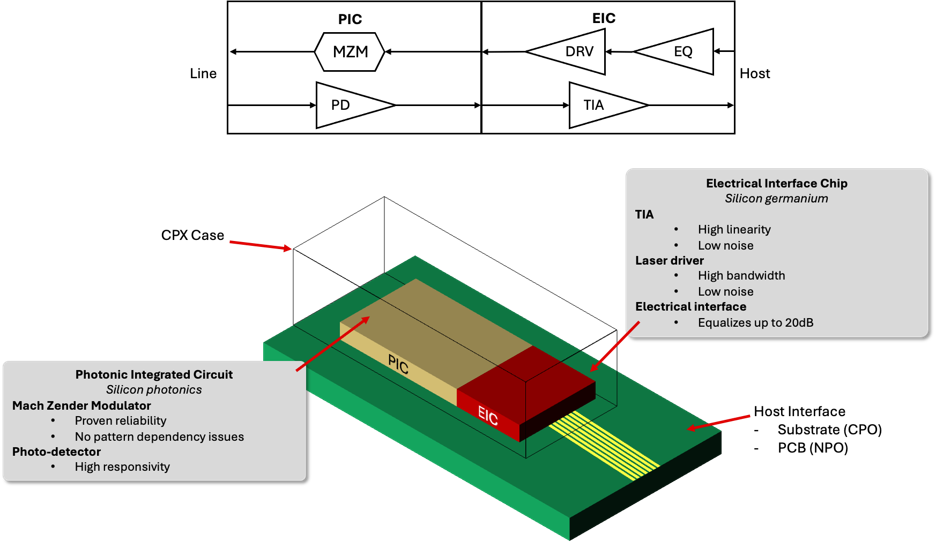
Figure 4. Vesta 200 6.4T CPX Product Architecture
The Vesta EIC is the electrical interface to the system host bus. On the EIC’s host receive side, the device is equipped with an analog equalizer capable of equalizing up to 20dB of electrical channel loss and ensuring the engine can accommodate even the most challenging near-package architectures. After equalization, the data signal is then amplified to provide an optimal voltage swing to the optical modulator. For the received optical signal, the EIC is equipped with a transimpedance amplifier (TIA) that delivers exceptional bandwidth and linearity with minimal noise, ensuring that electrical signals transmitted to the ASIC’s receiver are of the highest quality. Unlike CMOS-based alternatives, Vesta’s EICs utilize bipolar junction transistors constructed in silicon germanium (SiGe). SiGe offers superior analog performance to CMOS, which is why most data center optics shipped today utilize SiGe opto-electronics.
The Vesta PIC also leverages broadly popular material and technologies to deliver high-performance with exceptional reliability. The PIC utilizes a mainstream silicon photonics process, which is used to construct tried and true, highly reliable Mach-Zehnder modulators (MZM). This type of modulator delivers high performance without having the extreme temperature sensitivity found in other modulator architectures. This is just one of the reasons MZMs are deployed in very high volume for both direct-detect and coherent systems.
Power and cost
Almost all optical links operating today in hyperscale data centers are retimed. As detailed in the blog How open ecosystems will advance CPO adoption, the cost of these retimers is on the order of $13M and 2 megawatts of increased power consumption for a 100k XPU data center. Vesta, on the other hand, is fully linear without any retiming function. As a result, Vesta reduces optical interconnect power by approximately 70%, consuming just 5 pJ/bit to provide links up to 2 km as specified under IEEE 800BASE-DR4-2. Because these links are IEEE compliant, interconnects can be accomplished using standard pluggable optics as shown in 5.
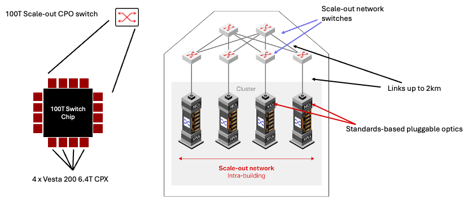
Figure 5. Scale-out network using Vesta interconnected switches
Along with the cost savings from removing retimers, Vesta has been architected to manage costs in other important ways. Vesta, like QSFP-DD and OSFP, is a pluggable, standards-based interconnect solution as shown in Figure 6. As such, Vesta can benefit from the same manufacturing cost curves as these mainstream optical modules that have consistently delivered significant annual cost reductions. A good example is the case of 800GBASE-DR8 modules, where research firm LightCounting’s April 2026 Market Forecast reported 21% annual cost reductions from 2022 to 2026.
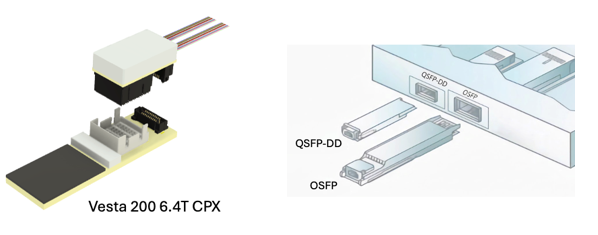
Figure 6. Standards-based, Pluggable Optical Interconnect Solutions
Ciena’s Vesta 200: Designed for the demands of AI networking
As previous technology transitions have shown, it can take years for customer requirements to fully emerge. AI networking has been different. From the outset, cloud providers have been remarkably consistent about what they need: solutions that deliver scale, density, reliability, low power, and cost efficiency.
Vesta was architected to meet those priorities. Rather than optimizing around a single attribute, the product demonstrates how thoughtful technology choices can deliver an optimized solution tailored for hyperscale AI infrastructure today. Learn more about the Vesta 200 6.4T optical engine and Ciena's vision for co-packaged and near package optics.