




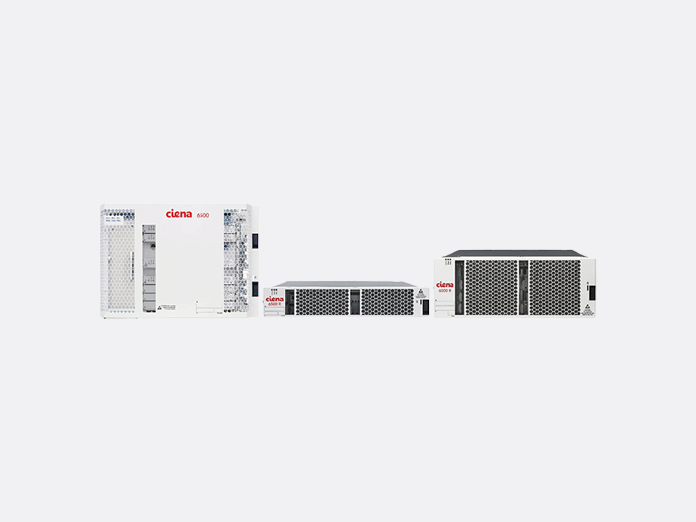
RLS
A reconfigurable line system
If you’re managing bandwidth-intensive applications—like connecting data centers, increasing submarine cable capacity, or building out 4G/5G infrastructure—RLS provides a compact, simple-to-deploy photonic layer platform built to scale. Easily expand nodal connectivity and wavelength capacity while gaining the flexibility and programmability to quickly respond to changing traffic demands.
Features and benefits
-
Automate optical networking through a modern photonic line software architecture designed for deployments at scale
-
Unlock the full efficiency of the optical layer with operational simplicity and predictable performance
-
Scale to meet your highest-capacity network requirements with an optimized, ultra-dense photonic layer
-
Reduce footprint as much as 70% compared to traditional chassis-based systems, with a modular and compact form factor
-
Simplify network deployment, operation, and troubleshooting with built-in capabilities like zero-touch provisioning (ZTP), auto-discovery, and real-time network monitoring
-
Double your fiber capacity with the simplest upgrade to L-band
Network applications
Long-haul networking
- Easily provision or reconfigure services across a flexible ROADM-based network designed for any generation of coherent technology
- Get massive scalability for your largest DCI deployments with an optimized C- and L-band architecture
- Improve photonic system performance with Raman amplification by supporting longer spans, higher capacity, and/or greater reach
Metro DCI
- Reduce cost per bit with fixed-grid filters optimized for your choice of coherent optics
- Accelerate deployments with an automated operational model
- Reduce footprint with highly dense, compact form factors that scale to cover your smallest and largest sites
RLS Hyper-Rail
- Connect geographically diverse AI data centers across multi-span routes with a multi-rail product designed for hyperscale AI connectivity
- Meet reliability, availability, and serviceability (RAS) requirements
- Maximize deployable fiber capacity per rack with up to 32x greater rack-level density and support for up to 128 rails (or fiber pairs) per rack
- Realize up to 75% power savings and 85% space reduction at amplifier sites where power and space are limited
Resilient, automated networking with the Layer 0 control plane
- Simplify and automate wavelength turn-up and management
- Improve network survivability with a field-proven, Layer 0 (L0) intelligent control plane
- Rapidly adapt to problems, outages, and other issues that could adversely affect your network’s performance
Double fiber capacity—the easy way
- Remove the need for L-band upgrade amplifier site visits with an integrated C- and L-band amplifier architecture
- Easily expand into the L-band with no impact to existing, in-service C-band traffic by using built-in amplified spontaneous emission (ASE) noise loading
- Eliminate additional L-band planning and engineering with stable, optimal performance maintained throughout the life of the system
Insights

blog
RLS Hyper-Rail: Solving the challenges of multi-rail photonics
Multi-rail photonics are unlocking a new era of optical network scale, allowing hundr...
ReadArticle
What is multi-rail?
Learn how multi-rail photonic line systems enable AI-scale capacity with a fraction o...
Learn moreVideo
Chalk Talk: Maximize your fiber capacity with L-band spectrum
In this Chalk Talk, Paul Chedore, Photonic Systems Architect, provides a detailed com...
WatchWhite Paper
Increasing Fiber Capacity with L-band: A comparison of three options
Networks with high bandwidth applications and sustained bandwidth growth are quickly ...
DownloadIntegrated C- and L-band architecture
By integrating the C- and L-bands, adding wavelengths to the L-band is just as easy as lighting the C-band. Double fiber capacity without complex re-engineering or re-balancing of the line system. There’s no impact to existing C-band channels.
Want to learn more? Click through the steps below to see a sample installation from the initial deployment to growing traffic in the C- and L-bands.
Related products
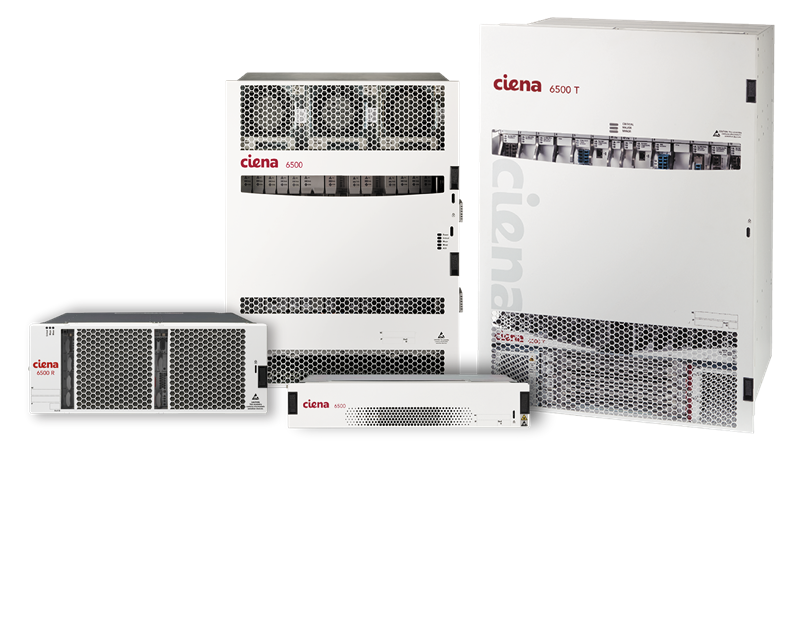
6500
Ciena’s 6500 family of Packet-Optical Platforms helps you continually stay ahead of unpredictable customer demands.
Learn more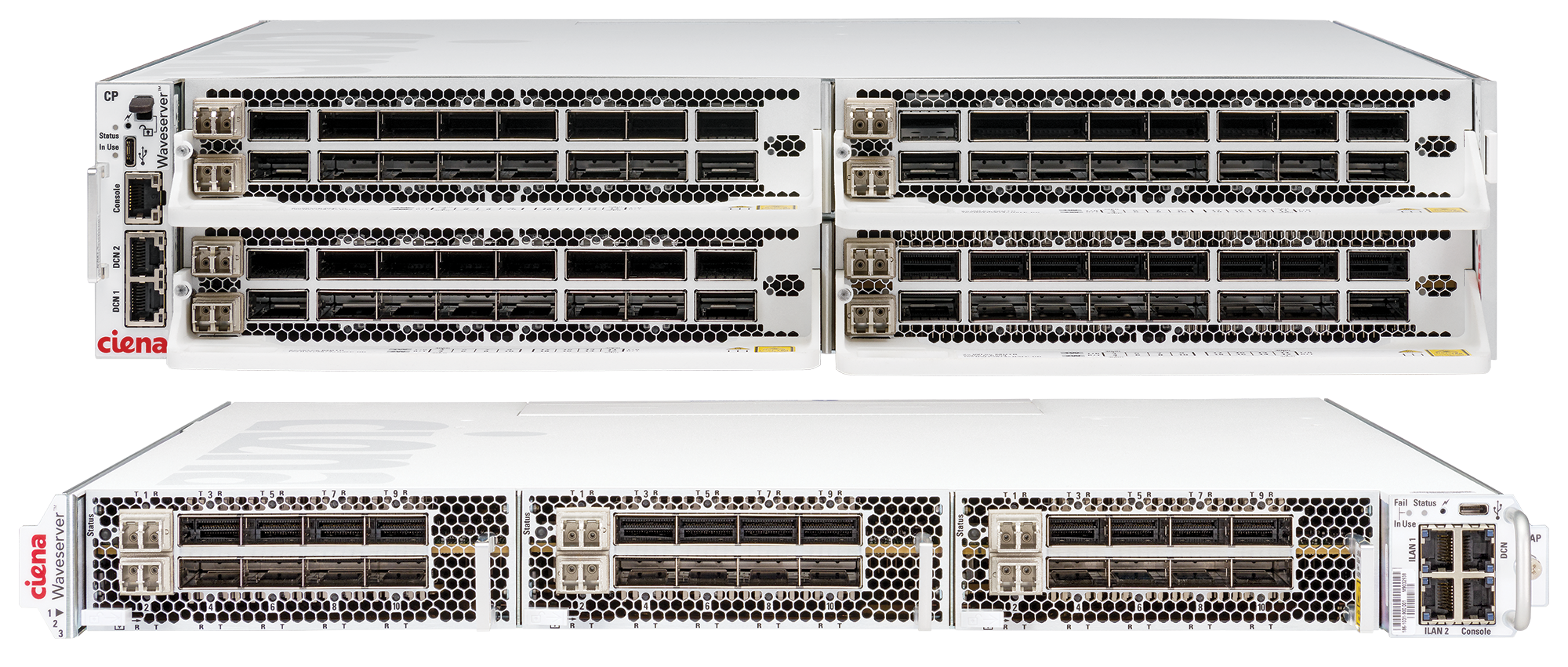
Waveserver
Waveserver high-capacity, compact, modular interconnect platforms deliver more capacity and lower power requirements for high-growth, bandwidth-intensive applications
Learn more
Navigator Network Control Suite
Navigator NCS accelerates multi-vendor, multi-layer network operations from one point of control. Learn what it can do for you.
Learn more