




The term multi-rail—sometimes called hyper-rail—has recently emerged in the optical industry to describe a new approach to photonic network design. To understand why multi-rail matters, it helps to consider what’s driving this new approach: increased capacity demands fueled by AI, which is redefining optical infrastructure. AI clusters are scaling from thousands to millions of XPUs, and they’re no longer confined to a single building. To access power and real estate, AI training environments are becoming geographically distributed, spanning multiple campuses and, increasingly, multiple regions.
The capacity required to interconnect these scale-across networks can reach tens of petabits per second, across hundreds of fiber pairs. This level of demand is pushing optical infrastructure beyond the limits of traditional design models. Even across backbone networks, where requirements might be less extreme, AI-driven traffic is leading hyperscalers to fully fill multiple fibers at a time.
To support the next phase of AI growth, the industry must rethink photonic layer design.
From wavelength scaling to rail scaling
For decades, the wavelength has been the unit of growth in optical networking. Capacity was added incrementally—one wavelength at a time—filling the C-band and then extending into the L-band. Photonic line systems were typically designed to manage a single fiber pair per module or chassis. This model worked well when traffic growth was steady and predictable.
AI has changed that dynamic.
When hyperscalers must deploy tens or even hundreds of fiber pairs between locations, scaling wavelength by wavelength—or even fiber by fiber—is no longer practical. This traditional approach would require many additional line amplification sites, along with large increases in space and power that are simply not viable.
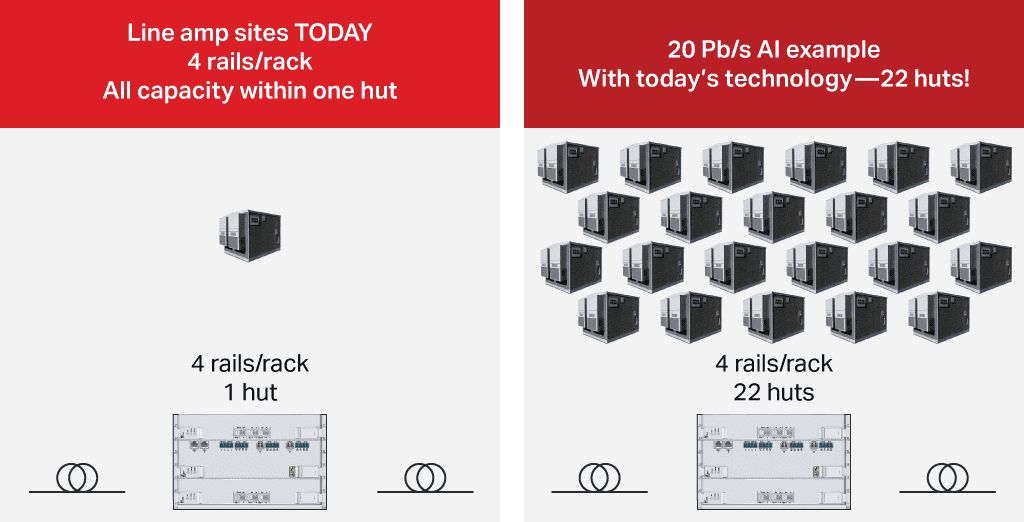
Figure 1. Massive densification required to support new distributed AI training requirements
The architecture itself must evolve.
Defining multi-rail
Multi-rail describes a new generation of photonic line systems designed to support multiple fiber pairs—or rails—in parallel. Rather than treating the wavelength as the fundamental unit of capacity, multi-rail treats the fully filled fiber pair as the new unit of scale.
Multi-rail systems are optimized for deploying multiple rails over the same route, with each rail functioning as a high-capacity optical highway with dedicated amplification, monitoring, and control. By integrating optical components into ultra-dense modules capable of supporting multiple rails, operators can dramatically increase fiber density within a rack while reducing overall power consumption.
This functional integration presents multiple benefits:
- Maximized capacity per rack
- Reduced need for additional line systems and sites
- Improved space and power efficiency
- Simplified operations at scale
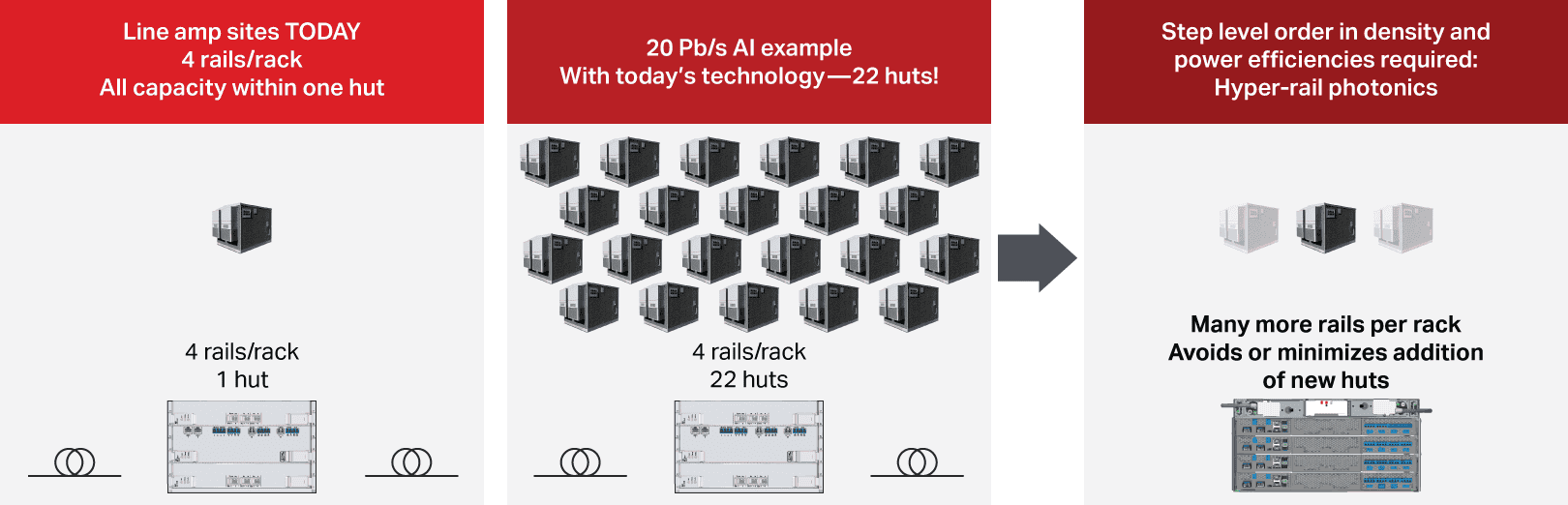
Figure 2. Multi-rail provides dramatic density and power efficiency improvements
Just as importantly, hyperscale AI networks require rapid deployment. Turning up hundreds of fiber pairs must be fast, repeatable, and automated. Multi-rail systems are therefore designed with automation in mind, helping operators quickly and reliably deploy and scale AI connectivity.
Density improvements extend beyond the line system
Achieving dramatic density, power, and space improvements requires more than redesigning the photonic line system alone. Amplifier hut designs must also evolve to ensure proper airflow and more efficient cooling. Today, a significant portion of site power—in some cases as much as 70%—is consumed by cooling equipment. By modernizing hut designs to reduce cooling overhead and support higher power per rack, operators can enable more rails per site and unlock greater revenue-generating capacity.
Enabling the next era of AI connectivity
Multi-rail is more than an incremental enhancement to optical line systems. It represents a fundamental shift from wavelength-based scaling to rail-based infrastructure—aligning the photonic layer with the scale and distribution of modern AI networks.
At Ciena, this architectural shift is embodied in our RLS Hyper-Rail solution, designed to help customers evolve from single-rail deployments to highly integrated multi-rail systems capable of supporting hyperscale AI growth. With RLS Hyper-Rail, operators can scale capacity with far greater space and power efficiency, increasing the number of rails supported per module and dramatically improving rack-level density by 32 times.
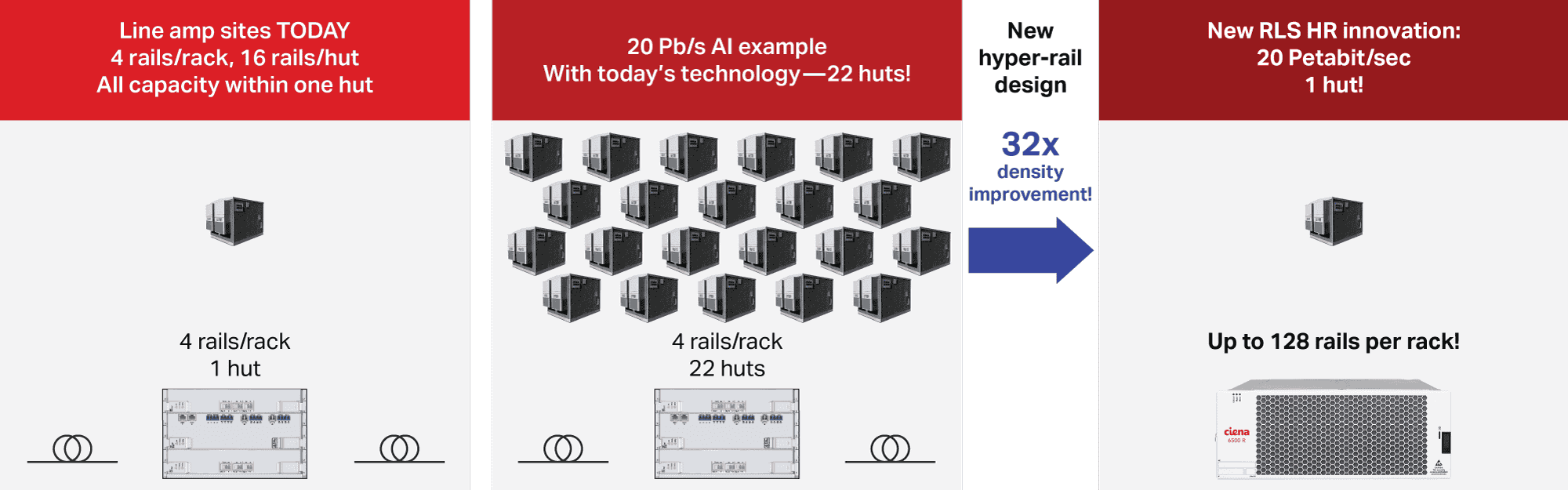
Figure 3. RLS Hyper-Rail provides up to 32x density improvement and 75% power savings
But density alone isn’t enough.
At hyperscale, deployment speed and operational simplicity are equally critical. Users must be able to bring networks online quickly, reliably, and repeatably—often across hundreds of fiber pairs. RLS Hyper-Rail is built with advanced instrumentation and automation to support that level of deployment at scale.
The AI era is redefining what optical infrastructure must deliver. Multi-rail is a key innovation enabling that transformation.