






As AI infrastructure scales at unprecedented speed, service providers, enterprises, and neoscalers are rethinking how networks are built, connected, and operated. These five routing and switching use cases show how the industry is evolving to meet that challenge.
If anything, AI has brought us to a rare moment. One where market reality, technical urgency, and industry momentum are colliding in real time.
But while hyperscalers may be the proverbial stars of the AI buildout, no single player can shoulder the connectivity demands of this infrastructure alone. That’s why AI is, in many ways, a team sport. The broader ecosystem has never been more important — helping turn AI’s ambition into operational reality.
For service providers, these signs are already clear: tier-1 and emerging data center markets are opening major opportunities. But amid this upheaval, the playbooks are changing — across wholesale, retail, and managed services.
It’s no surprise, then, that enterprises and neoscalers are taking a harder look at how they consume these connectivity offerings, too.
So, what does that look like in practice? Let’s break down five of those dynamics — and the routing and switching use cases helping to make them possible.
Rethinking metro data center managed services
High-speed wavelength managed services — including MOFN — are benefiting from an obvious AI tailwind. But a quieter shift is also playing out in lower-speed managed services.
To understand why, you have to know two things.
First, vacancy rates in major metro data centers are at an all-time low.
Second, providers offering colocation services have long delivered 1G and 10G wavelength and Ethernet managed services across these facilities. But they have typically done so across two separate networks — adding footprint, rack count, power consumption, and complexity. Not exactly the recipe operators need as networks evolve to support AI.
So, what is changing? Advances in technology now make it possible to bring these offerings together on a single router-based network infrastructure. FlexE plays a central role in enabling this shift.
FlexE provides dedicated paths, guaranteed bandwidth, and full multi-tenant enterprise service isolation — even across off-net networks. And with up to 4x lower latency and jitter than traditional IP services, providers can meet Layer 1-like SLAs without going back to a separate network.
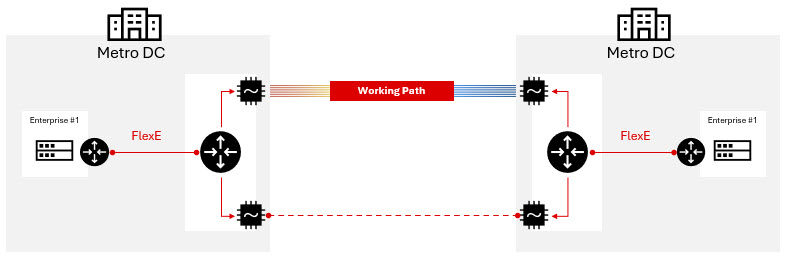
Figure 1: FlexE metro data center connectivity
No wonder interest in this converged approach is growing. The space and power savings alone make a strong case. Add simpler management and a smoother modernization path for OTN deployments, and the value becomes even clearer.
In today’s crowded metro data center environment, that’s a compelling equation.
Where demand goes, connectivity must follow
Remote data center expansion is already well underway. But rich local interconnection — think cloud on-ramps and peering — may not be available everywhere on day one.
One approach is to use a well-located service provider site as an interconnection point between an ecosystem-ready data center, where traffic lands, and newer rural or remote data centers. In this model, the service provider adds high-capacity coherent routes to deliver wholesale metro or WAN backhaul services for multiple third parties.
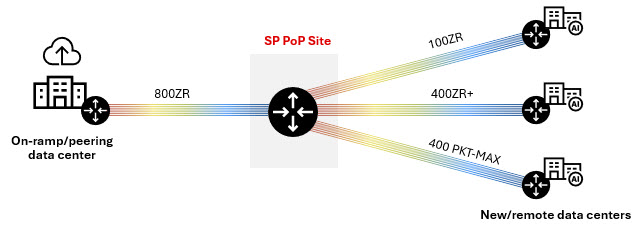
Figure 2: Data center backhaul connectivity
For these use cases, coherent routing has proven itself time and again. The “coherent in, coherent out” hardware permutations are extensive — well beyond what we could capture in a single image.
And on the software side, innovation continues to expand what can be carried over coherent, including technologies such as timing and synchronization.
The payoff? Service providers already using Ciena coherent routers for mobile backhaul can add data center backhaul on the same platform over time. As wholesale strategies go, that is a pretty strong one.
Enterprise access can’t stand still
As these data centers come online, enterprise access connectivity has to keep pace.
The good news? Service providers now have more outside plant design options. In this case, it is about pushing fiber and capacity into the access via coherent WDM on outdoor, weatherized form factors.
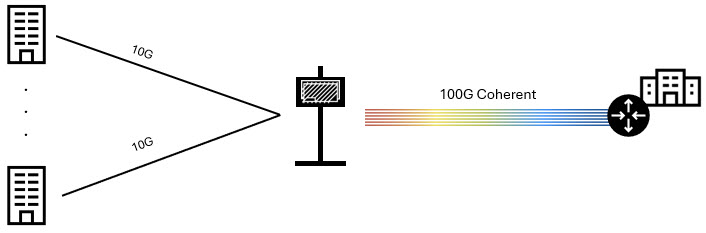
Figure 3: Weatherized coherent access
That gives service providers a stronger hand: more capacity and reach, more fiber preservation, and a more practical path to support inference demand as it moves closer to the edge.
The enterprise angle
Until recently, many enterprise networks were built for voice, internet, and VPN traffic — not AI. And as it turns out, AI is anything but just another workload.
Picture this: some AI traffic needs to move over specific links or providers. Some cannot be interrupted. Some need the lowest-latency path available. Add digital sovereignty to the mix, and suddenly the network has a lot more to handle.
As AI raises the bar for enterprise IP services, modern traffic engineering capabilities — such as Segment Routing Flex-Algo — are no longer just network features. In many cases, they can become part of the enterprise AI strategy.
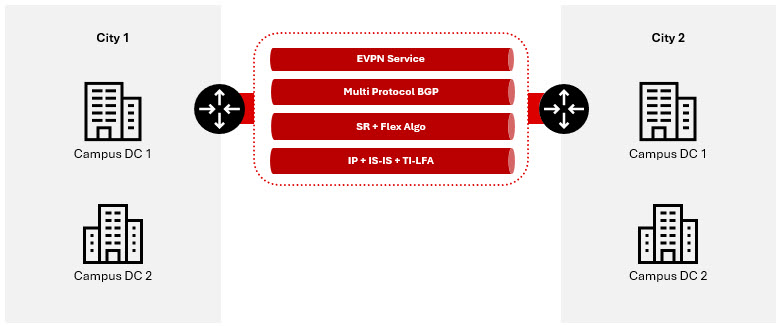
Figure 4: Enterprise campus interconnect
Whether you’re an enterprise upgrading your network or a service provider rethinking your managed service offerings, that’s worth keeping in mind.
For neoscalers, the in-between stage matters
Neoscalers are building more of their own infrastructure — from data centers to dedicated dark fiber — to support rapid AI-driven expansion. But none of that happens overnight.
For now, many will still rely on third-party data centers and leased connectivity. And that puts the trade-offs front and center: fiber leasing costs, power, cooling, and space.
In these environments, every bit of fiber capacity matters. And in some cases, higher-performance coherent modems with better spectral efficiency— beyond what pluggables can deliver — may be required. With Ciena’s coherent routing, those capabilities can still be integrated directly into routers that also support IP services.
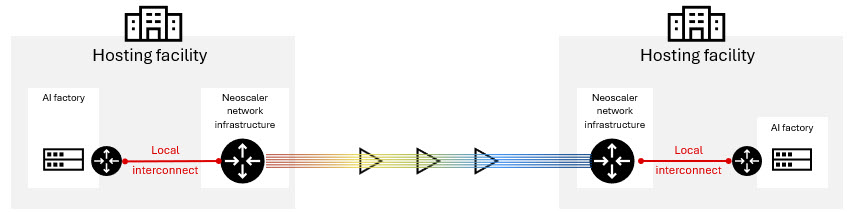
Figure 5: Neoscaler converged network over wholesale infrastructure
The result? A single router can support local IP interconnect, while helping operators get more out of the fiber they already have — all with multi-layer control, troubleshooting, and inventory management.
As neoscalers stay laser-focused on growing their core AI business, simple, high-performance networks can be a powerful asset — helping them avoid draining precious operational resources from their organizations.
From market dynamics to use cases
Data center connectivity is a rich area. There’s a lot more to dive into, but hopefully this gives you a useful snapshot of where the market is moving — and a few threads worth following.
Ready to go deeper? Check out this application note for the full set of routing and switching use cases, including the design details behind how Ciena can help support the next phase of your AI infrastructure.